
by Emmitt Barry, Worthy News Washington D.C. Bureau Chief
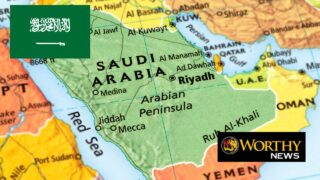
(Worthy News) – Saudi Arabia’s military coalition accused Yemen’s Iran-backed Houthis on Thursday of carrying out a drone attack on a power station in Medina that supplies electricity to one of Islam’s holiest sites, marking another dangerous escalation around the kingdom’s sacred cities.
The attack struck the Taibah electricity distribution station at approximately 5:11 a.m. Tuesday, knocking one transformer out of service but causing no disruption to the wider electrical network, according to Saudi-led coalition spokesman Maj. Gen. Turki al-Malki.
Saudi authorities said an investigation of wreckage recovered from the site confirmed Houthi involvement in planning and executing the drone attack. The facility supplies electricity to the Prophet’s Mosque in Medina, considered Islam’s second-holiest site after the Grand Mosque in Mecca.
The Houthis denied responsibility. A Houthi military source quoted by the Houthi-controlled Saba news agency called the Saudi accusation a “lie.”
The Medina incident comes just two weeks after Saudi forces said they intercepted and destroyed a Houthi drone south of Mecca before it entered restricted airspace. Saudi officials described that incident as the second Houthi attempt to target Mecca since 2017, an allegation the Houthis also denied.
Islamic End-Times Expectations Surround Yemen
The advance of Houthi warfare toward Mecca and Medina carries an unusual religious dimension, particularly when viewed against Islamic end-times traditions previously examined by Worthy News.
In Twelver Shiite eschatology, the appearance of the Mahdi—a messianic leader expected to emerge in the last days—is preceded by several signs. Among them is the appearance of a figure known as the Yamani, who arises from Yemen and calls people to support the Mahdi. Other traditions place the Mahdi’s appearance in Mecca and describe an opposing army being swallowed by the earth in the desert between Mecca and Medina.
As Worthy News has previously emphasized, the Houthis emerged from Yemen’s Zaydi Shiite tradition, which is distinct from Iran’s Twelver Shiism. Although the Houthis have developed a close military and ideological relationship with Tehran, there is no verified evidence that their present offensive is being conducted specifically to fulfill these end-times traditions.
Nevertheless, the geography is striking. Within weeks, Saudi Arabia has accused the Houthis of threatening Mecca and now attacking infrastructure supplying Medina—the two cities at the center of Islam’s holiest territory.
For Christians watching the rapidly changing Middle East, these developments are another reminder to remain watchful without turning speculation into certainty. The convergence of warfare, ancient religious expectations and struggles over the region’s holiest places deserves careful attention as events continue to unfold.
Copyright 1999-2026 Worthy News. This article was originally published on Worthy News and was reproduced with permission.