
by Stefan J. Bos, Worthy News Europe Bureau Chief
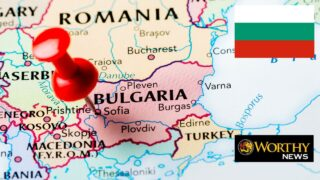
SOFIA, BULGARIA (Worthy News) – Bulgaria’s presidential election Sunday has been overshadowed by drone attacks on commercial ships in the Black Sea and growing divisions over support for Ukraine, as voters prepare to choose between a government-backed incumbent and an opposition challenger.
President Iliana Yotova, supported by Prime Minister Rumen Radev’s governing Progressive Bulgaria party, faces former caretaker Prime Minister Andrey Gyurov, who is backed by reformist opposition groups.
A Market Links survey published Wednesday showed Yotova leading with 47.3 percent against Gyurov’s 30.6 percent, suggesting a possible runoff on November 1. Nationalist candidate Kostadin Kostadinov trailed with 10.3 percent.
The vote comes six months after Radev’s party won a landslide parliamentary victory, securing a rare single-party majority and raising concerns among opponents about the concentration of political power.
BLACK SEA SECURITY FEARS
The campaign has increasingly focused on Russia’s war in Ukraine after drone attacks damaged or sank several commercial vessels near Bulgaria and neighboring Romania, both members of the NATO military alliance.
Bulgaria has requested additional NATO aircraft and anti-drone systems to strengthen its defenses, while the European Parliament on Thursday criticized the government’s response to Russian threats in the Black Sea and called for stronger regional security measures.
Yotova has advocated a diplomatic “Coalition of Peace” to help end the war and promised that no Bulgarian soldiers would be sent to Ukraine during her presidency.
“There are many warmongers in our country; I am not one of them,” she told supporters during the campaign.
DEMOCRATIC POWERS AT STAKE
Gyurov has warned that the government’s parliamentary dominance could weaken democratic checks and balances, arguing that the president must be prepared to challenge those in power.
Although Bulgaria’s presidency is largely ceremonial, the head of state commands the armed forces, can veto legislation and makes appointments to important state institutions.
The election is therefore viewed as a test of Bulgaria’s political direction as NATO and the European Union confront mounting security threats along the Black Sea.
Copyright 1999-2026 Worthy News. This article was originally published on Worthy News and was reproduced with permission.