
by Stefan J. Bos, Worthy News Chief International Correspondent
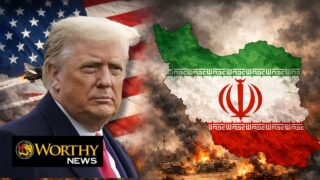
WASHINGTON/JERUSALEM (Worthy News) – The United States military has been instructed to prepare for resuming major combat operations against Iran, raising fears of another devastating armed confrontation in the Middle East as President Donald J. Trump considers new strikes ahead of crucial American and Israeli elections, several U.S. sources say.
The Pentagon instructed U.S. Central Command, which oversees American military operations in the Middle East, several days ago to complete preparations for a possible new campaign, according to U.S. officials familiar with the preparations.
This directive did not specify a date for launching attacks, and Trump has not made a final decision on whether to authorize military action.
However, American and Israeli sources suggested that operations could resume before the November 3 U.S. midterm elections, although strikes after the vote also remain under consideration.
MILITARY PREPARATIONS
The developments come amid tensions over Iran’s nuclear program and concerns that renewed American and Israeli airstrikes could trigger widespread retaliation.
Potential targets reportedly include Iranian nuclear facilities, energy infrastructure and other strategically important sites.
“The department’s job is to develop and present military options to the president,” a Defense Department official told broadcaster NBC News, emphasizing that military planning does not mean an attack has been ordered.
These preparations follow discussions between Trump and Israeli Prime Minister Benjamin Netanyahu, whose government considers Iran’s nuclear ambitions and military capabilities major threats to Israel’s security.
DIPLOMATIC EFFORTS FALTER
Diplomatic efforts to reach an agreement with Tehran have made little progress, despite mediation by regional governments.
Negotiations have focused on Iran’s nuclear activities, economic sanctions and reopening the Strait of Hormuz, a vital shipping route for international oil supplies that has been disrupted by the conflict.
Iran maintains that its nuclear program is intended for peaceful purposes, while Washington and Jerusalem fear Tehran could eventually develop nuclear weapons.
Before earlier American and Israeli attacks damaged Iran’s nuclear facilities, international inspectors estimated that Tehran possessed hundreds of kilograms of uranium enriched to 60 percent purity, approaching weapons-grade levels. Inspectors have since faced difficulties establishing the whereabouts and condition of its nuclear material.
IRAN WAR WARNINGS
Iranian officials have warned that another major American military campaign would trigger a forceful response.
Renewed attacks could also draw in Iranian-backed armed groups elsewhere in the Middle East, raising concerns about further fighting in Lebanon, Yemen and other regional flashpoints.
The United States and Israel launched major attacks against Iran on February 28, triggering Iranian retaliation and disrupting international shipping and energy markets.
The fighting has also claimed American lives. Six U.S. soldiers were killed in an Iranian drone attack in Kuwait on March 1, while the wider conflict had left at least 18 American military personnel dead and more than 750 wounded by late August, according to Pentagon figures.
HUMAN COST OF WAR
The war has already killed thousands of people and wounded tens of thousands across the Middle East, including civilians caught in attacks on residential neighborhoods and other populated areas.
In Iran, authorities had reported more than 3,500 deaths by late August, while earlier health ministry figures recorded more than 26,500 injuries, including many children among the victims.
Elsewhere in neighboring Lebanon, where fighting erupted between Israel and the Iran-backed Hezbollah group, authorities reported more than 4,300 deaths since March 2. The Lebanese Health Ministry did not distinguish between civilians and combatants.
By late August, Israel had reported 60 deaths from Iranian attacks, while casualties were also recorded in several Gulf nations.
The figures, drawn from government and medical sources, could not all be independently verified. They also cover different reporting periods, making it difficult to establish an exact region-wide casualty total.
ELECTIONS APPROACH
The latest military preparations come at a politically sensitive moment, with Israel scheduled to hold parliamentary elections on October 27 and American voters heading to the polls on November 3.
Another major military campaign could have far-reaching consequences for both nations, particularly if Iranian retaliation causes additional casualties, prolonged fighting or higher oil prices, according to observers.
Trump and his national security advisers have reportedly discussed military options in recent days. Senior administration officials also met at Camp David last week to consider the next steps in the Iran conflict and fighting involving Yemen’s Houthi rebels, according to U.S. officials.
Renewed strikes before the American midterm elections were among the options under consideration, although no final decision had been made, sources said.
While American forces prepare for possible renewed warfare, the final decision rests with Trump as diplomatic efforts continue to avert another major escalation in the Middle East.
Copyright 1999-2026 Worthy News. This article was originally published on Worthy News and was reproduced with permission.