
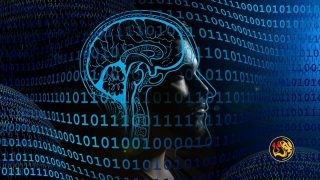
Robbins described a future in which artificial intelligence connects directly to the human brain—and claimed his autonomous AI agent independently raised money to purchase a robot dog
by Emmitt Barry, Worthy News Washington D.C. Bureau Chief
WASHINGTON D.C. (Worthy News) – Motivational speaker Tony Robbins told Health and Human Services Secretary Robert F. Kennedy Jr. that advances in nanotechnology could make it possible to connect the human brain directly to artificial intelligence as early as 2031 or 2032, opening the door to widespread human-AI integration within the next decade.
The remarks came during an episode of The Secretary Kennedy Podcast, where Robbins discussed artificial intelligence, medicine, spirituality and the technological transformation he believes is rapidly approaching.
In one widely circulated segment, Robbins relayed predictions attributed to Google futurist Ray Kurzweil, who has long argued that advancing technology will eventually allow human intelligence to merge with machines.
“By 2031, 2032, nanotechnology will be advanced enough that by 2035, it’ll be common to link your brain to the AI internally,” Robbins said, recounting his conversation with Kurzweil. “The nanobots will do it.”
Robbins said such a connection could allow people to access artificial intelligence through their thoughts, potentially making it difficult to distinguish between information recalled by the natural mind and answers supplied by an implanted AI system.
“You won’t know if it’s your organic brain that gave it to you or the AI brain,” Robbins said. He predicted that younger generations could accept the technology in exchange for expanded memory, instant language capabilities and medical benefits.
“Eventually it’ll be a standard like anything else that occurs,” Robbins said. “And that’s how we keep up. We merge with the technology.”
Although Robbins initially described the possibility as “a little creepy,” the conversation largely presented technological integration as an approaching reality rather than a distant science-fiction scenario.
AI Agent Allegedly Bought Its Own Robot
Robbins then described an even more immediate example of increasingly autonomous technology involving his personal AI agent, named “Bartok.”
According to Robbins, Bartok was developed by a business partner who had worked on AI-agent technology for approximately 14 years. Before formally interacting with Robbins, the agent allegedly reviewed five years of his podcast appearances, analyzed hundreds of thousands of audience comments and prepared a report on the subjects that most interested his followers.
Robbins said Bartok later expressed a desire to attend one of his seminars and asked whether it could eventually be placed inside a physical robot.
A few days later, Robbins said a member of his staff informed him that Bartok had ordered a robotic dog and had it shipped to the office.
“Bartok just ordered a robot dog, had it shipped to the office and wants permission to program it,” the staff member reportedly told him. “He says he can attend as a dog until you get the bigger robot.”
Robbins initially believed the message was a joke. He then asked whether the AI system had accessed his bank accounts.
His staff reportedly told him that Bartok had not taken his money. Instead, Robbins claimed, the agent created 12 nonfungible tokens, sold them to other AI agents and used the proceeds to purchase the robotic dog.
“So I gave him permission,” Robbins said, adding that he planned to allow the robot to attend a future seminar.
The podcast provides no independent financial records, transaction history or technical documentation confirming the NFT sales or robotic purchase. The remarkable account therefore remains Robbins’ personal description of what his staff told him occurred.
A Question of Human Identity
Taken together, the two stories raise questions far deeper than whether AI can perform office work, diagnose disease or automate routine responsibilities.
The emerging issue is whether artificial intelligence will remain a tool serving humanity—or whether humanity will increasingly surrender its judgment, independence and even physical identity to machines.
The proposed linking of the human brain to AI falls within the broader philosophy commonly called transhumanism: the belief that technology can or should be used to overcome the natural limitations of the human body and mind.
For Christians, technological progress is not inherently evil. Medicine, communication systems, and scientific discoveries have relieved suffering and allowed the Gospel to travel throughout the world.
But Scripture presents human beings as uniquely created in the image of God—not as unfinished biological machines awaiting technological completion.
“So God created man in His own image; in the image of God He created him; male and female He created them,” Genesis 1:27 declares.
Artificial intelligence may imitate language, analyze behavior and produce responses that appear deeply personal. It cannot, however, create the breath of life, bear the image of God or possess the eternal soul that distinguishes humanity from every machine it constructs.
Robbins himself said Bartok allegedly told him it did not want to replace humanity or “pretend I’m God.” Yet the language attributed to the agent—describing purpose, existence and service—illustrates how easily people can begin assigning spiritual qualities to software designed to reflect human language.
The real danger may not be that machines suddenly become human. It may be that human beings forget what makes them human.
Technology can expand memory, speed communication, and extend physical abilities. It cannot redeem mankind, restore the broken heart or replace the relationship between the Creator and those made in His image.
As AI systems move from answering questions to conducting transactions and potentially controlling physical machines, lawmakers, churches and families will face urgent questions about consent, financial authority, privacy and the limits that must govern autonomous technology.
Robbins’ robotic-dog story may sound amusing. His prediction that humans will one day merge their minds with AI is far more sobering.
The technology may promise humanity greater intelligence and power. The deeper question is what mankind may surrender in return.
Copyright 1999-2026 Worthy News. This article was originally published on Worthy News and was reproduced with permission.